Table of Contents
CHAPTER 1: The Weight of Silver Fur
I have lived thirteen years in the quiet rhythm of Arthur’s heartbeat.
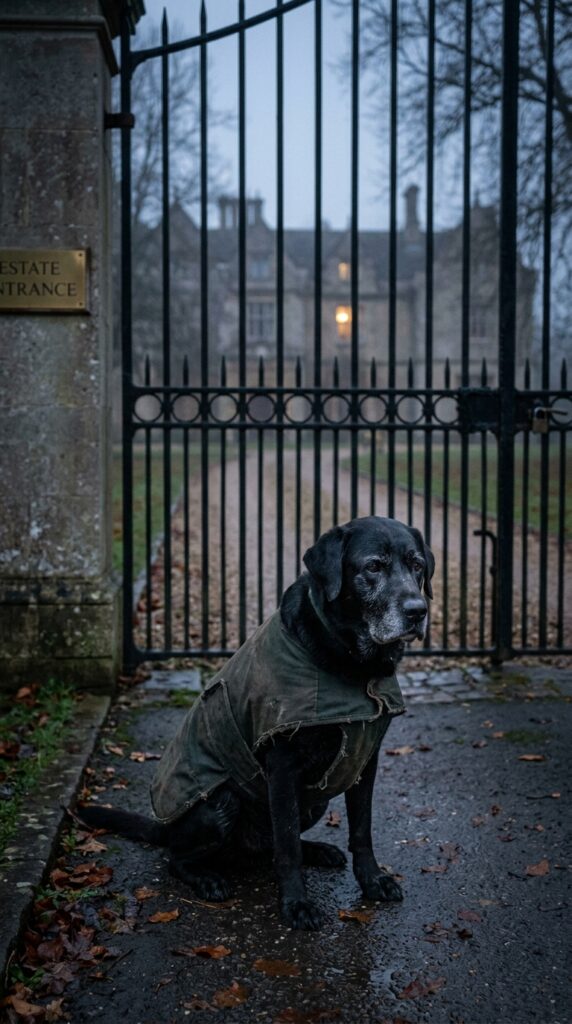
My muzzle is dusted with the frost of age, and my joints ache when the morning dew clings to the tall grass, but my purpose remains as sharp as it was when I was a pup: to be his shadow, his witness, and his silent keeper.
We are relics of a slower age, living in the amber glow of a house filled with leather-bound books and the scent of pipe tobacco.
Arthur is a man of gentle hands, though they tremble now.
We spend our afternoons by the creek, a place that once sang with the clarity of mountain snow.
Lately, however, the song has soured.
The water has taken on an oily sheen, a slick, iridescent film that tastes of metallic rot.
My nose, once keen enough to track a sparrow through a gale, recoils from the sharp, chemical tang rising from the silt.
It started with the billionaire’s new facility upstream—a monolith of glass and steel that hums with an unnatural, hungry vibration.
Yesterday, while Arthur sat on the bank, his hand resting absently on my head, I smelled it clearly: the dark poison.
It was thick, cloying, and lethal.
It wasn’t just dirt; it was a deliberate, silent death being pumped into the veins of the earth.
When Arthur reached down to fill his canteen, a surge of instinct—the primal, fierce loyalty that defines my very existence—overtook me.
I didn’t bark a greeting or a playful warning; I let out a low, guttural growl, then lunged forward, snapping my teeth inches from his hand to force him back.
I knocked the canteen from his grasp.
It clattered against the stones, spilling the tainted water into the moss.
Arthur’s eyes went wide.
He didn’t see the danger I sensed; he saw only the sudden, uncharacteristic aggression of a companion he believed he knew.
He recoiled, his face hardening with a confusion that bruised my spirit more than any blow could.
“Barnaby, what’s come over you?” he whispered, his voice trembling.
He didn’t understand that I was guarding the only thing that mattered.
But as the dark suits from the facility emerged from the tree line, their faces devoid of human warmth, I realized my loyalty had made me a target.
They did not see a protector; they saw a nuisance to be discarded.
CHAPTER 2: The Scent of Treachery
The air around the Blackwood Estate had always tasted of pine needles and damp earth—a perfume I knew better than my own reflection in the hallway mirror.
But lately, the breeze carried something sharper, something that bit at the back of my throat like dry metal.
My master, Arthur, didn’t notice.
He walked with that slow, rolling gait of his, his hand resting absently on my silver-flecked muzzle.
He was a man of quiet habits and fading strength, just like me, and he trusted the world to be as gentle as he was.
But the woods behind the estate were whispering a different story.
I first caught the scent near the rusted drainage pipe at the edge of the property.
It wasn’t natural.
It was a chemical, oily stench—the kind that makes the hair along a dog’s spine stand in defiance.
When the trucks came at night, silent and prowling like shadows, the scent grew thick enough to coat my tongue.
It was a dark poison, a slick, industrial rot meant to be buried deep beneath the roots of the ancient oaks, where it would surely bleed into the groundwater Arthur relied on.
I tried to warn him.
One evening, as the moon hung thin and pale in the sky, I led him toward the clearing.
My paws moved with a urgency that defied my aching hips.
I barked—a low, guttural warning that tore at my weary throat—and lunged toward the disturbed earth where the soil looked bruised and unnatural.
I scratched at the ground, frantic, wanting him to smell the corruption, to see the gleaming, toxic sludge oozing from the billionaire’s hidden barrels.
Arthur simply sighed, patting my head with a trembling hand. “Easy, old boy,” he murmured, his voice clouded with a gentle, tragic blindness. “It’s just a mole, or a trick of the light.”
He didn’t understand that I was not fighting the wind, but the coming darkness.
That night, I stood guard at the edge of the property, refusing to eat or sleep.
I stared into the blackness of the trees, teeth bared, shivering not from the cold, but from the terrifying realization that my voice—my only tool of protection—was insufficient against the magnitude of the greed lurking in the shadows.
I was an aging sentry, sensing the end of an era, unaware that the betrayal was already closing its iron grip around us.
CHAPTER 3: The Shadow in the Pines
The scent of the valley had changed.
For twelve years, I had walked these woods with Arthur, my paws sinking into damp moss and the familiar perfume of pine needles.
But today, the air tasted of cold metal and something sharp—a chemical bite that clawed at the back of my throat.
We were near the creek, that silver ribbon of water where Arthur once taught me to wade.
The billionaire’s massive machinery had been humming on the ridge for weeks, a low, mechanical growl that vibrated in my very bones.
Today, however, the silence was worse.
The water, usually clear as a mountain morning, flowed with a sluggish, oily sheen that made the hair along my spine rise in a warning ridge.
I saw them then: men in stark white suits, moving with the cold efficiency of predators.
They were pouring canisters into the runoff stream that fed the valley’s lifeblood.
My nostrils flared, catching the scent of the dark poison—a sweet, cloying odor that promised nothing but decay.
Arthur was sitting on a fallen log, his cane resting against his knees, eyes fixed on the horizon as he talked to me about the old days.
He didn’t see the men.
He didn’t smell the sickness creeping into the silt.
I stood, my joints aching with the stiffness of my age, and looked toward the creek.
I let out a sharp, guttural bark—the sound of a sentry guarding his post.
I paced, nudging Arthur’s hand with my wet nose, then darting toward the water, my tail tucked low.
I barked again, a desperate, raspy plea for him to look, to see the destruction unfolding in the shadows of the pines.
“Not now, Buster,” Arthur murmured, absentmindedly patting my head, his gaze still lost in the golden light of the afternoon.
I lunged toward the creek, intending to snap at the boots of the intruders, to drive them away from the water that belonged to us, to the memory of our home.
I wanted to bite the hand that poured the blight, to protect the man who had been my entire world.
But my old legs were heavy, and the world was turning against us.
Before I could reach the bank, a rough hand grabbed my collar, jerking me backward into the dark, suffocating grip of a man who smelled only of greed.
The warning died in my throat.
I had tried to save him, but the silence had already begun.
CHAPTER 4: The Weight of the Cold Road
They called it madness.
To the men in the sharp suits—men who smelled of sterile offices and expensive, hollow promises—my frantic pacing and the way I blocked the cellar door was a sign of a mind unspooling.
They did not see a guardian; they saw a relic that had lived too long and learned too much.
I had seen the dark, iridescent sludge leaking from the billionaire’s containers into the well-water that Arthur, my dear friend, drank every morning.
I had tried to warn him with the only language I had: a low, guttural growl and a desperate tug at his hem.
But the corrupt hands moved faster than my aging limbs.
I remember the cold bite of the wire muzzle they forced over my nose.
It smelled of rusted iron and old fear.
My warning bark was stifled, reduced to a pathetic, wet whine that vibrated in my chest.
Arthur stood on the porch, his eyes clouded with a confusion that broke my heart more than the rough grip on my collar. “He’s gone aggressive, Arthur,” they lied, their voices smooth as oil. “The old boy’s brain is turning.
It’s the kindest thing.”
I was hoisted into the back of a van, the metal floor vibrating with a heartbeat that wasn’t mine.
As the tires crunched over the gravel of the only home I had known for thirteen years, I watched Arthur through the glass.
He looked so small, a silver-haired silhouette framed by the porch light, losing the only thing that would have died to keep him safe.
The drive felt like an eternity.
We traveled far from the scent of the pine woods and the comforting aroma of Arthur’s pipe tobacco.
When the doors finally creaked open, the air was sharp and salt-stung.
We were on a desolate stretch of coastal road, where the wind howled like a wounded thing.
A heavy boot pushed me out.
I tumbled into the wet tall grass, my arthritic hips flaring with a white-hot agony. “Stay,” one of them sneered, though it wasn’t a command—it was a sentence.
The van roared away, its red taillights fading into the mist like receding embers.
I stood there, shivering, the muzzle still tight against my skin, silencing the howl that rose from my soul.
I had sacrificed my comfort, my safety, and my place by the hearth to expose the poison they brought to our land.
For my loyalty, I was rewarded with the cold indifference of the wild.
Yet, as I turned my nose back toward the scent of the inland woods, I knew I could not simply lie down.
A heart that has loved for a lifetime does not know how to stop protecting, even when it has been discarded.
CHAPTER 5: The Weight of an Unspoken Vow
They say that time is a thief, but they never mention that it also acts as a mirror.
As I lay on the cold, unforgiving concrete of this alleyway, the ache in my joints is a dull, rhythmic reminder of the life I once knew.
I am an old dog, my muzzle dusted with the frost of many winters, and my eyes, once sharp enough to track a sparrow in flight, now cloud over with the gray haze of abandonment.
I remember the warmth of the hearth, the scent of pipe tobacco on his wool sweater, and the way he would rest a heavy, trembling hand upon my head.
We were two souls tethered by a quiet understanding—a pact forged not in words, but in the steady thrum of our heartbeats.
I gave him my vigilance; he gave me his home.
It was a fair trade, a lifetime of loyalty distilled into the simple act of staying by his side.
But humans, for all their grand designs and towering monuments, are fragile creatures when faced with the reach of those who hold power.
The billionaire’s poison—that dark, chemical sludge—didn’t just seep into the soil of our valley; it seeped into the marrow of our integrity.
When I barked, when I paced, when I threw my worn body against the gate to sound the alarm, I was merely a nuisance to the men in tailored suits.
To them, my warning was a disruption of progress.
To my owner, under the crushing weight of their intimidation, I became a liability to be scrubbed away.
I do not harbor bitterness.
A dog’s heart is incapable of the convoluted malice that humans cultivate.
Instead, I feel a profound, hollow dignity.
I sacrificed my comfort, my shelter, and the softness of a familiar rug to shield him from a truth he was too terrified to face.
Now, cast out by those corrupt hands, I find myself contemplating the cost of devotion.
Dignity, I have learned, is not found in the luxury of one’s surroundings, but in the steadfastness of one’s spirit.
I am hungry, and the winter wind bites through my thinning coat, yet my purpose remains unblemished.
Love is often branded as madness by those who cannot comprehend it, but I know the truth: to love truly is to remain loyal, even when the world demands you vanish.
I will sleep now, dreaming of that hearth, content in the knowledge that my heart stayed true until the very end.
